Our old website was built in a different era. Not a long time ago, but a different era all the same. It launched during Covid, which changed most things. The bigger change came afterwards. It was built before AI was mainstream. The services we offer have not changed, and neither has the way we speak with clients. We are still people first. We have to know a business, and understand it, before we can do a good job for it. The way we work now could hardly be more different from five years ago.
Make the shift.
That line is the new tagline, and it is also the brief. AI has brought a lot within reach. Technology that would have been out of the question a few years ago is attainable now, if it is used properly and kept sustainable. The job is to use those tools so the result is better, not only faster. We wanted to show that on our own site first. A move from the old way of building to the new one. A small showcase of the tools we are now using everyday to deliver results for clients.
A site with less to attack
The new site is headless. What you are reading was rendered ahead of time and saved as a file. The usual targets of a web application are not sitting behind this page.
- →No database
- →No PHP assembling the page when you arrive
- →No application waiting on the request before it can answer
Headless is not new. What is new is that a small studio can keep a setup like this. Without AI in the day-to-day coding, a decoupled stack would still be hard to justify for most small businesses. We use it constantly. It lets us build more carefully, and take on work that used to be priced out of reach.
Performance
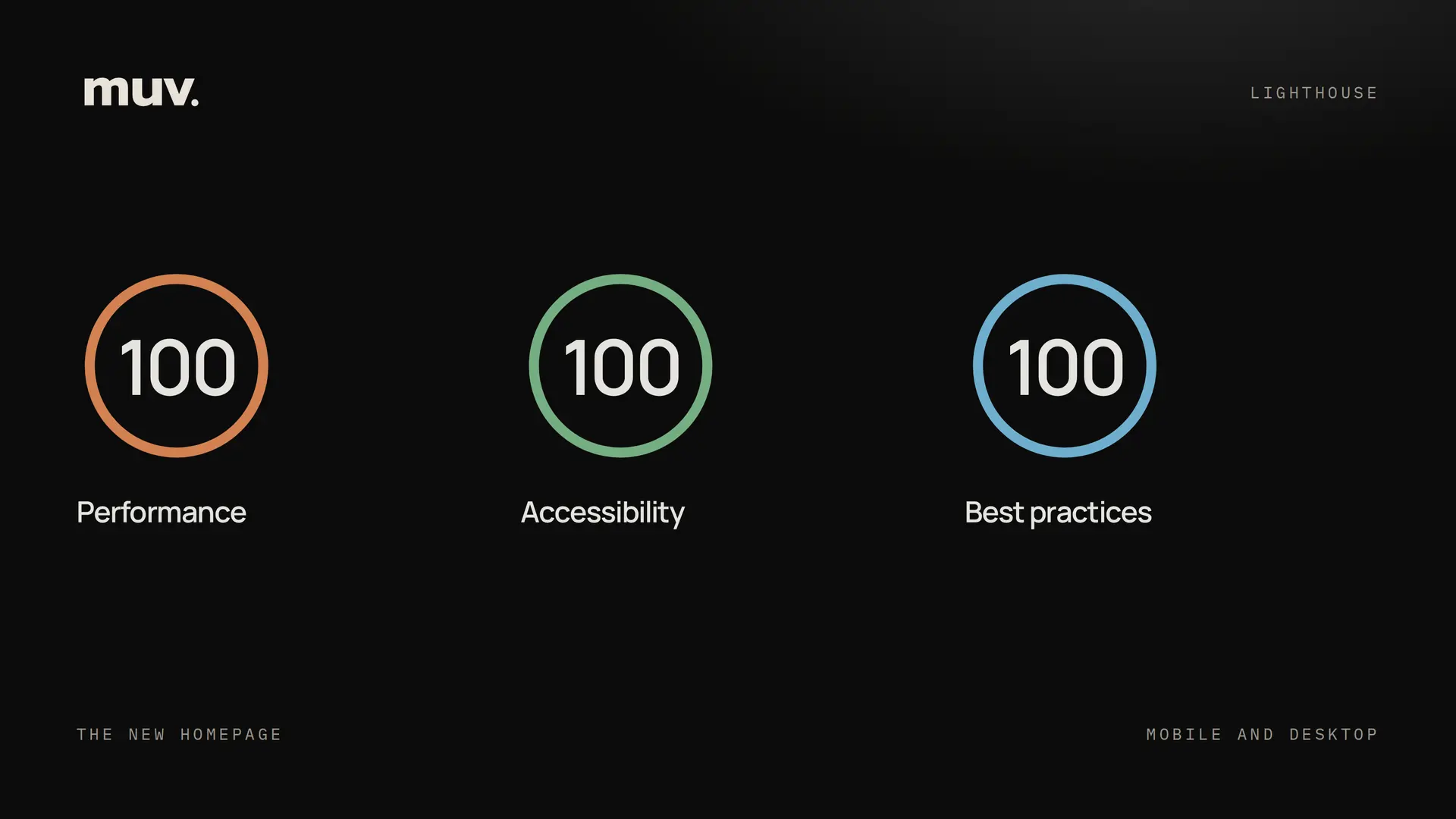
On a traditional site, a visit starts a chain of work. The server reads the request, fetches data from a database, runs a script such as PHP, and only then sends the HTML to the browser. Here, on our new site the page already exists. It is delivered as a file. There is no database query and no runtime to wait on, so the response is quicker. That is better for the person reading it, and easier for search engines, and for generative search, to fetch and index. On a phone and on a desktop, the new homepage scores 100 for performance, accessibility and best practices. You can see these results live yourself here.
Security
The threats have moved as well. Finding a hole in a website used to take a specialist. Automated tools, and AI, have made it easier to aim at known flaws. Monitoring and firewalls still matter. They do not stop a dynamic site being hit, again and again, by credential stuffing and injection attempts. That traffic has a cost even when the attack fails. We have always seen our clients' sites attacked, and we have always had the tools to keep up with it. The volume in recent months is of a different order. A site feels it when that traffic does not let up. A headless site shrinks the surface. The page people see is separate from any database. Taking this on early means we can walk clients through the same change, with a clear view of how the web is actually being attacked.
The Future
We don't see traditional websites as they have been built for the past 20 years as substainable. Customers will become accostamed to far faster websites, search and AI engines will ignore them, and the cost of substaining a website constantly under attack from malicious AI actors will become out of reach for business owners. We see headless as a natural next step in stability, speed and performance.